
The Growing Problem of Counterfeit Cat6 Data Cables
In recent years, the proliferation of counterfeit products has become a significant concern across various industries, and the technology sector is no exception. Among the most affected items are Cat6 data cables, which are critical for establishing reliable and fast internet connections. As the demand for high-speed networking continues to grow, counterfeit Cat6 data cables have emerged as a prevalent issue. These substandard cables are being heavily sold on popular online platforms such as Amazon, where consumers are often unaware of their inferior quality.
The rise in counterfeit Cat6 cables can largely be attributed to their increasingly competitive pricing. Unscrupulous manufacturers cut corners by using inferior materials and lacking the quality control measures necessary to meet industry standards. This is where the primary point of distinction is made. Many brands on Amazon are using several deceptive practices to cheat consumers into thinking they are getting certified cable, when the fact is the products have zero recognized third party certifications at all.
For instance, I have seen brands claim in big bold letters, “No. 1 Cable Brand. The Most Certified Cable In The Industry“, on products which are not legal to install per widely accepted National Electrical Code and are unsafe to install in general. For these products to be sold this way, means they are intentionally avoiding UL or ETL certification of the product, trying to disguise the lack thereof. Chances are almost certain it is because its too substandard of a product, to pass those inspections. Those inspections aren’t just performance ratings, they involve fire and electrical safety. With more products pushing power over ethernet (PoE), the risk of fires caused by counterfeit products is increasing.
Consumers may unknowingly purchase these counterfeit products, trusting that they will receive good products at a seemingly below average price. The implications of such choices can be severe.
This issue is particularly concerning for businesses that rely on reliable networking solutions for operations. Using counterfeit cables can jeopardize data transmission, resulting in lost productivity and increased downtime. It addition the fire risk is simply that, a catastrophic and unnecessary risk. Furthermore, it poses risks to personal users as well, who may not realize that the cables they are utilizing for their home networks could negatively impact it performance, or even possibly burn down their home. Thus, recognizing and addressing the danger of counterfeit Cat6 data cables is essential for ensuring safe and reliable networking environments.
Understanding Cat6 Data Cables: What You Need to Know
Cat6 data cables, or Category 6 cables, are essential components for networking, designed to support high-speed data transmission for both residential and commercial purposes. These cables are widely used to connect devices such as computers, routers, and switches, allowing for seamless communication in local area networks (LANs). One of the critical features of Cat6 cables is their ability to transmit data at speeds of up to 10 gigabits per second over distances of up to 55 meters, making them superior to their predecessors, such as Cat5 and Cat5e cables.
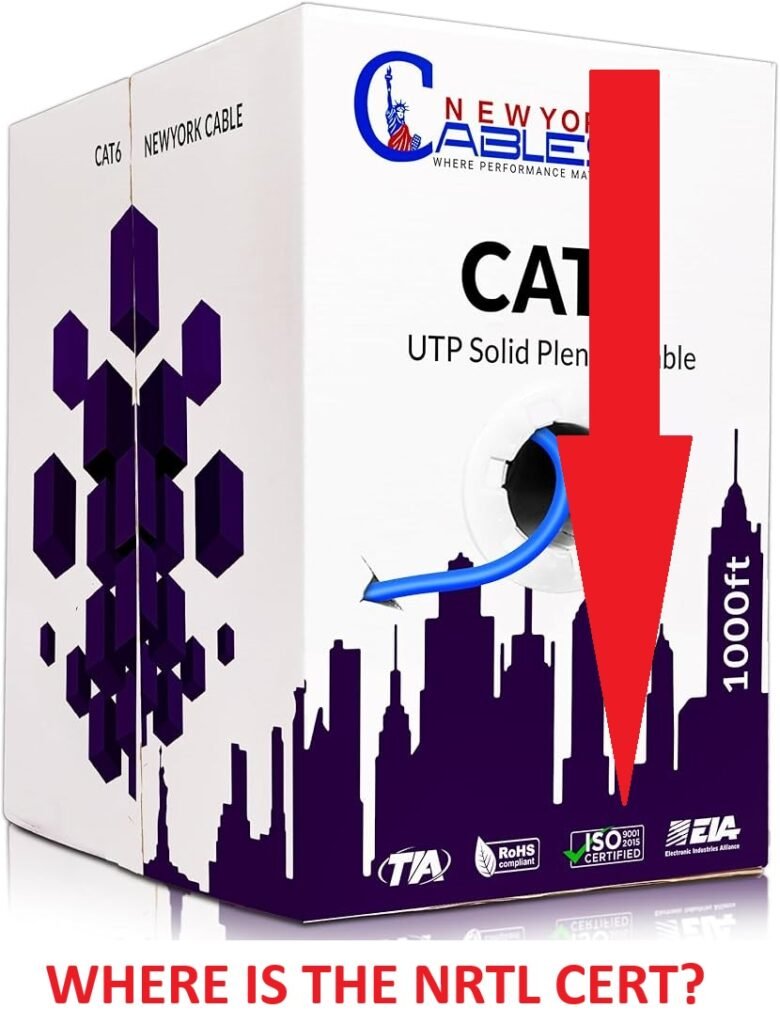
The technical specifications of Cat6 cables include a thicker gauge wire compared to earlier categories, as well as additional internal separators that help reduce crosstalk and improve performance. Crosstalk, the interference between adjacent wires, can significantly degrade signal quality, thereby impacting data transfer speeds. Compliance with industry standards, such as those set by the Telecommunications Industry Association (TIA) and the Electronic Industries Alliance (EIA), is crucial for ensuring that Cat6 cables perform optimally. However, testing cable with a Fluke DSX Certifier for performance capability is not a testing of product safety for toxic chemicals in smoke produced during burning, flammability resistance, or ability to withstand intended electrical current without the wire itself heating up and causing a fire. EIA and TIA set standards for expected performance criteria. They do not certify products as Plenum or Riser Rated cable. That is what UL and ETL do. Lacking those certification ID’s on the product, while marketing and selling it as Certified CMP or CMR cable is fraud.
Understanding the specifications and standards associated with Cat6 data cables is vital for consumers and businesses alike. When selecting cables, it is imperative to ensure they are certified by an NFPA , as using non-compliant or counterfeit cables can lead to various risks, including degraded network performance, frequent disruptions, and increased vulnerability to data breaches. Proper certification not only secures reliable connectivity but also guarantees protection against potential electrical hazards. As demand for high-speed internet connections continues to grow, recognizing the importance of using authentic Cat6 cables is more critical than ever.
How to Identify Counterfeit Cat6 Data Cables
Identifying counterfeit Cat6 data cables requires careful attention to several specific features and characteristics. The first step is always to examine the packaging. Authentic Cat6 cables are usually sold in well-constructed, professional packaging that includes the manufacturer’s branding. If the packaging appears flimsy or unbranded, it’s a strong indication that the product may be counterfeit. Additionally, look for certifications and compliance marks on the package, such as UL (Underwriters Laboratories) or ETL (Intertek), which signify that the cable meets necessary safety standards.
For a larger list you can reference OSHA’s NRTL list, which is very small I might add.
The Importance of Certified CMP Type Cables
Communications Multipurpose Plenum (CMP) cables are crucial components in modern data communication systems, particularly when it comes to ensuring safety in high-density installations. One of the primary distinctions of CMP cables is their ability to meet stringent safety standards as outlined by the National Fire Protection Association (NFPA). This makes them essential for installation in any building’s plenum spaces, which serve as air circulation pathways for heating and cooling systems.
The certification of CMP cables by a recognized third-party laboratory provides assurance to both manufacturers and consumers regarding the fire safety and performance of the product. These certified cables are specifically designed to limit the spread of fire and emit minimal smoke when subjected to flame. Therefore, they play a significant role in enhancing overall building safety, as a failure to use certified cables can lead to severe hazards in the event of a fire.
It is also essential for manufacturers to comply with the required safety standards during the production of CMP cables. This compliance guarantees that every batch meets the necessary specifications before it reaches the market. For consumers, purchasing certified CMP cables means investing in products that have undergone rigorous testing for safety and performance, thereby optimal performance in their networking systems. The absence of counterfeit cables not only preserves the integrity of the network installation but also safeguards the lives of individuals who occupy the building.
In summary, the significance of certified CMP type cables cannot be overstated. They are fundamental for ensuring the safety and reliability of data transmission infrastructures, especially in areas where fire risk is a concern. By choosing certified CMP cables, consumers actively contribute to greater safety standards in technology deployment and help mitigate potential risks associated with counterfeit products.
Risks Associated with Using Counterfeit Data Cables
The use of counterfeit Cat6 data cables presents a multitude of risks that can significantly affect both personal and business environments. One of the primary concerns is the potential for fire hazards. These counterfeit cables often lack the essential safety standards found in genuine products, which means they may overheat or short-circuit, leading to electrical fires. Such incidents not only endanger physical assets but also pose serious safety risks to individuals using or working around these installations.
Beyond fire risks, counterfeit Cat6 cables frequently result in severe connectivity issues. Poor-quality materials and construction can lead to increased signal interference, resulting in data loss, slower transmission speeds, and unreliable connections. Users may experience frequent outages, which can disrupt business operations, compromise productivity, and negatively impact service delivery. These interruptions can be particularly damaging in a professional context where stable and fast internet is essential for day-to-day functions.
Moreover, the use of inferior cabling can lead to the failure of network equipment over time. Devices such as routers, switches, and computers are designed to operate optimally with high-quality cabling. However, when connected to counterfeit Cat6 cables, these devices may suffer from excessive strain, leading to malfunctions or even permanent damage. The financial implications of replacing faulty equipment can be substantial, encompassing not only the direct costs of new devices but also potential downtime and lost revenue.
Ultimately, the risks associated with counterfeit data cables are extensive. The long-term consequences, such as compromised data transmission, equipment failures, and safety hazards, highlight the importance of investing in verified and certified Cat6 cables. It is essential to prioritize quality over cost to ensure a safe and efficient networking environment.
Legal Implications of Using Non-Compliant Cables in the U.S.
In the United States, the use of non-compliant and counterfeit Cat6 data cables poses significant legal ramifications, particularly as it pertains to adherence to the National Fire Protection Association (NFPA) standards. These standards are designed to ensure safety and reliability in electrical installations, and any deviation from them can result in serious consequences.
Primarily, utilizing counterfeit cables that do not meet NFPA specifications leads to a lack of compliance with state and local building codes. Each jurisdiction has its own regulations regarding the use of electrical wiring, and using non-compliant data cables can render installation projects illegal. This non-compliance may result in building inspectors imposing fines, denying permits, or even ordering the removal of the illegal installations, which can lead to substantial financial losses.
Additionally, organizations that utilize counterfeit cables may face liabilities in the event of an incident stemming from their use, such as fires or equipment failures. In such scenarios, affected parties could file lawsuits for damages incurred, which can escalate into costly legal battles and settlements. There is also the potential for criminal charges in cases of blatant disregard for safety standards, highlighting the severe risks associated with using counterfeit materials.
Furthermore, businesses and contractors may find that the reputation of their companies is adversely affected by their use of counterfeit cables. Trustworthiness and reliability are crucial in the tech industry, and legal troubles stemming from the use of non-compliant products can deter clients and partners alike. It is important for individuals and businesses to ensure that their data cables comply with relevant regulations to mitigate these legal risks.
COMMON AD TACTICS USED TO SELL COUNTERFEIT PRODUCTS
- ISO 9001 Certified: This has nothing to do with cable product testing.
- CCA: Copper clad aluminum. This is a direct fire risk in PoE applications and is not authentic data cable which needs to be solid copper conductors.
- SOLID CONDUCTORS: I cant tell you how many times this phrase is used on products that are not UL or ETL certified. When they want to get around CCA labeling which is obvious to an eye and a microscope, they choose an alloy. This still changes the impedance rating which makes it potentially dangerous and/or fragile, causing conductors to break easily and not withstand intended use.
- BIG EIA/TIA LOGOS: If you don’t see a NRTL certification ID, the product is NOT listed per the standards of the National Electric Code and is unlawful to install. That’s the only certification you need to see, because the TIA / EIA performance standards are part of that.
Conclusion: The Importance of Vigilance in Cable Purchases
Ensuring the integrity and reliability of our network setups is crucial, particularly when it comes to the data cables we select for our technology infrastructure. As observed throughout this guide, counterfeit Cat6 data cables pose significant risks not only to the performance of our networks but also to overall safety and compliance with established standards. These fraudulent products often fail to meet the required specifications, leading to subpar performance, increased latency, or even potential damage to connected devices.
Consequently, it is imperative that consumers remain vigilant when purchasing Cat6 cables. Conducting thorough research will help distinguish legitimate products from counterfeit ones. Recognizing certification labels, analyzing packaging for discrepancies, and purchasing from reputable vendors are key practices that can mitigate the risk of acquiring substandard cables. Furthermore, being aware of the typical pricing for authentic Cat6 cables can prevent buyers from falling prey to suspiciously low-priced alternatives.
By actively seeking certified and compliant Cat6 cables, consumers can significantly enhance their network reliability and adhere to safety standards. Vigilance in the purchasing process not only protects our investments in technology but also fosters a safer digital environment. Therefore, it is the responsibility of each purchaser to be informed, to question, and to verify the authenticity of the products they intend to use for their networking needs.